Not legal advice
This describes how the process generally works. Deadlines in your case may differ. If something has been filed against you, talk to a lawyer.
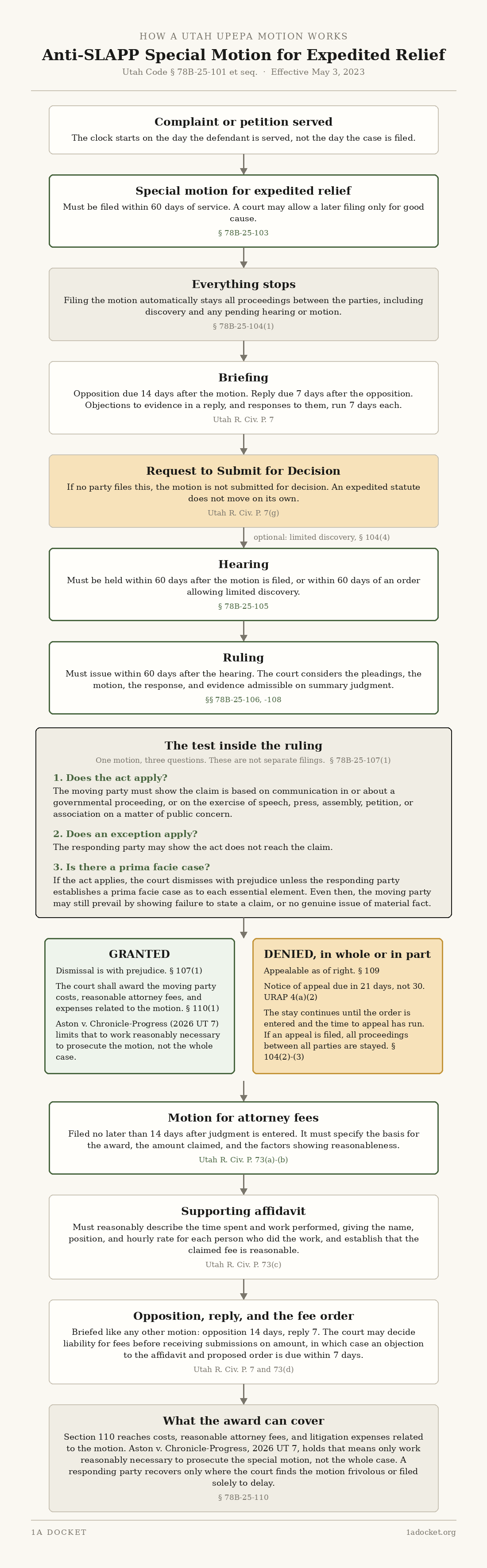
How a UPEPA motion works
Service through appeal, with the deadlines that decide cases before the merits.
Complaint or petition served
The clock starts on the day the defendant is served, not the day the case is filed.
Special motion for expedited relief
Must be filed within 60 days of service. A court may allow a later filing only for good cause.
§ 78B-25-103Everything stops
Filing the motion automatically stays all proceedings between the parties, including discovery and any pending hearing or motion.
§ 78B-25-104(1)Briefing
Opposition due 14 days after the motion. Reply due 7 days after the opposition. Objections to evidence in a reply, and responses to them, run 7 days each.
Utah R. Civ. P. 7 · See the briefing sequence in detail →Request to Submit for Decision
If no party files this, the motion is not submitted for decision. An expedited statute does not move on its own.
Utah R. Civ. P. 7(g)Hearing
Must be held within 60 days after the motion is filed, or within 60 days of an order allowing limited discovery.
§ 78B-25-105Ruling
Must issue within 60 days after the hearing. The court considers the pleadings, the motion, the response, and evidence admissible on summary judgment under Rule 56.
§§ 78B-25-106, -108The test inside the ruling
One motion, three questions. These are not separate filings. § 78B-25-107(1)1. Does the act apply?
The moving party must show the claim is based on communication in or about a governmental proceeding, or on the exercise of speech, press, assembly, petition, or association on a matter of public concern.
2. Does an exception apply?
The responding party may show the act does not reach the claim.
3. Is there a prima facie case?
If the act applies, the court dismisses with prejudice unless the responding party establishes a prima facie case as to each essential element. Even then, the moving party may still prevail by showing failure to state a claim, or no genuine issue of material fact.
Dismissal with prejudice
Dismissal is with prejudice. § 107(1)
The court shall award the moving party costs, reasonable attorney fees, and expenses related to the motion. § 110(1)
Appeal within 21 days
Appealable as of right. § 109
Notice of appeal due in 21 days, not 30. URAP 4(a)(2)
The stay continues until the order is entered and the time to appeal has run. If an appeal is filed, all proceedings between all parties are stayed. § 104(2)–(3)
Motion for attorney fees
Filed no later than 14 days after the judgment is entered. It must specify the basis for the award, the amount claimed, and the factors showing reasonableness.
Utah R. Civ. P. 73(a)–(b)Supporting affidavit
Must reasonably describe the time spent and work performed, giving the name, position, and hourly rate for each person who did the work, and establish that the claimed fee is reasonable.
Utah R. Civ. P. 73(c)Opposition, reply, and the fee order
Briefed like any other motion: opposition 14 days, reply 7. The court may decide liability for fees before receiving submissions on amount, in which case an objection to the affidavit and proposed order is due within 7 days.
Utah R. Civ. P. 7 and 73(d)Related to the motion, not the whole case
Section 110 reaches costs, reasonable attorney fees, and litigation expenses related to the motion. A responding party recovers only where the court finds the motion frivolous or filed solely to delay.
§ 78B-25-110Download this chart as an image (PNG) — for printing, or to drop into a brief or a story.